Countryside Trips
English-speaking drivers. Fixed prices. Zero surprises.
Booking a coach from 3,000 miles away is stressful enough. Booking one for UK countryside roads — where lanes narrow to single tracks, villages post width restrictions, and vehicle size matters — is a different problem entirely.
Get it wrong and the consequences are concrete. A vehicle too wide may struggle with a village approach. A quote that does not clearly explain parking, tolls, waiting time, or route charges can create budget stress later. A 9:00 AM departure wakes your East Coast group at what feels like 4:00 AM.
This page gives you direct answers: which vehicle fits your group and your route, what costs to clarify before booking, and how to check that your operator is properly licensed before you send a deposit across the Atlantic.
No vague reassurances. Just the logistics.
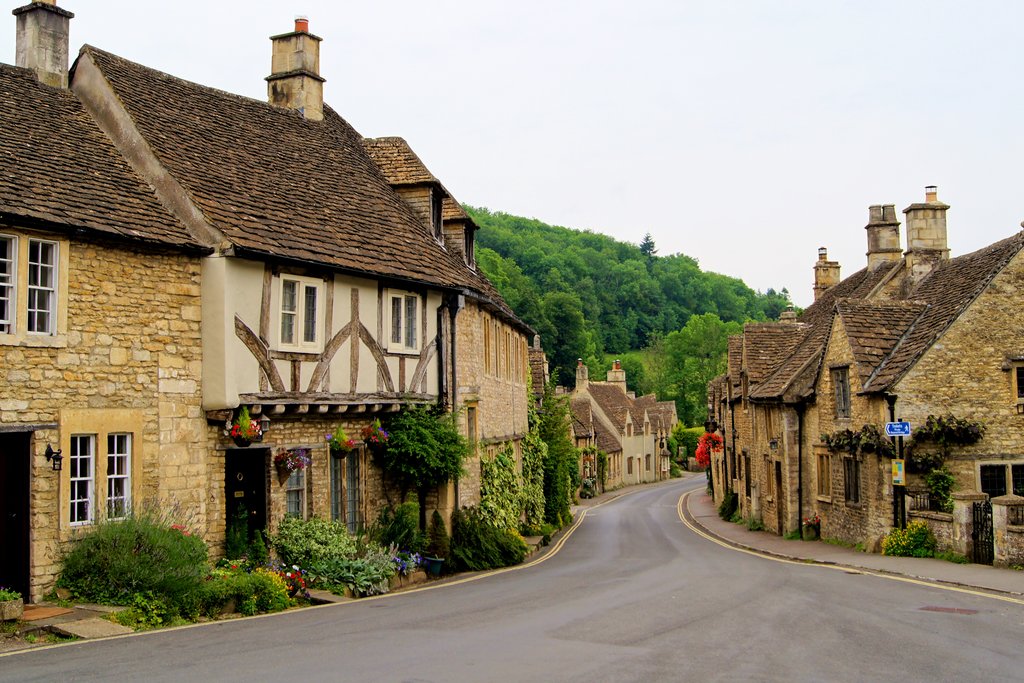
Many American visitors are comfortable driving abroad — until they meet their first narrow UK countryside lane, with stone walls on both sides, limited passing space, and local traffic approaching from the other direction.
Self-driving from Heathrow to the Cotswolds can add rental insurance questions, parking uncertainty in village centers, and route stress on roads that may feel very different from those back home. Private hire removes that pressure. Your driver handles the route. You handle the window view.
Expert Tip: Always request vehicle dimensions, not just passenger count. Some full-size coaches may be unsuitable for narrow Cotswolds, Cornwall, or village-center routes without careful access planning.
Rail and public bus routes do not always reach rural churches, heritage estates, village stops, or countryside venues at the times your group needs.
For a multi-generational family trying to visit two Scottish Borders villages and a record office in a single daylight window, a private minibus can make the itinerary far more practical and controlled.
UK transport pricing can vary depending on vehicle type, route, VAT treatment, tolls, congestion charges, waiting time, parking fees, and luggage needs. That is why every quote should clearly explain what is included before you commit.
A clear quote should show the total hire cost, any route-related charges, the VAT position where applicable, payment terms, and any optional gratuity guidance in plain language.
Fixed tour buses run on fixed schedules. Private hire gives your group more control. Whether you're a corporate group planning a later start, a genealogy group needing extra time at a churchyard, or a family traveling with mobility needs, the schedule can be planned around the people actually traveling.
The itinerary works around your group, not the other way around.
Our Fleet
In the US, "charter bus" often brings a full-size coach to mind. In the UK countryside, larger vehicles may face access limits around narrow village lanes, tight turns, stone bridges, and designated coach parking areas.
Width, height, turning radius, luggage space, and parking access can matter just as much as passenger count. Match the vehicle to the route first. Seat count comes second.
My Travel Swift can help match your group with a suitable vehicle based on passenger count, luggage needs, route access, and comfort requirements:
Expert Tip: Plan luggage space before choosing the final vehicle size. A 16-seater may be more comfortable for 12–14 passengers if the group is carrying suitcases, camera gear, walking kit, or mobility equipment.
For multi-hour countryside travel, amenities such as WiFi, USB charging, climate control, reclining seats, onboard WC access, and PA systems can make a major difference to comfort.
Availability varies by vehicle, so confirm the features you need before booking.
Not every rural vehicle has step-free access, and not every route is suitable for every vehicle type. WAV availability, mobility needs, and pet-friendly travel should be requested and checked during booking.
Confirm these requirements before the vehicle is assigned.
The largest vehicle is not always the right vehicle. The right vehicle is the one that fits your group, luggage, route, parking access, and planned stops.
A 49-seater can be useful for motorway travel and larger group movement, but it may not be suitable for narrow village approaches, tight rural turns, limited coach parking, or historic streets with access restrictions.
A 16-seater is not simply a smaller bus. For some countryside routes, it can make village access, parking, and stop-to-stop movement much easier to manage.
Longer road legs can be more comfortable in a larger coach, especially when the group needs extra space, reclining seats, onboard WC access, or a smoother motorway journey.
For some itineraries, a mixed approach may work better: a larger coach for the main transfer, then a smaller vehicle for narrow village stops or rural access points. This depends on the route, group size, parking options, and local access rules.
Route-Based Vehicle Planning Available
| Vehicle Type | Typical Capacity | Recommended with Luggage | Route Suitability | Typical Trip Type |
|---|---|---|---|---|
| 7–8 Seater MPV | Up to 8 | 6–7 | Often suitable for smaller rural roads, village stops, and flexible pickup points | Executive retreats, small ancestry groups, private countryside transfers |
| 10–16 Seater Minibus | Up to 16 | 12–14 | Useful for many countryside routes where a full-size coach may be less practical | Family village visits, heritage stops, photography tours, small group day trips |
| 17–30 Seater Minibus/Coach | Up to 30 | 22–25 | Suitable for wider rural roads, regional routes, and stops with planned parking access | Corporate groups, garden visits, regional heritage tours |
| 30–49 Seater Coach | Up to 49 | 28–38 | Best for motorways, main roads, larger attractions, and locations with coach parking | Large family groups, Lake District gateway trips, major attraction transfers |
| 39–70+ Seater Executive Coach | Varies by vehicle | Confirm at booking | Best for major roads, larger venues, and pre-planned group movement | Corporate retreats, large group transfers, conference and event transport |
| WAV – Wheelchair Accessible | Varies | Confirm at booking | Route-dependent; accessibility needs and vehicle dimensions should be checked in advance | Groups with mobility or accessibility requirements |
Amenities vary by vehicle type and availability. Confirm WiFi, USB charging, WC access, luggage space, and accessibility features before booking.
Consolidating pickups to one point — such as Kensington, central London, or Heathrow — can help protect the day from slow hotel-to-hotel collection delays. For groups arriving from the US, a later morning departure may also feel more comfortable after a long flight.
Allow extra time for countryside routes. A Cotswolds loop is not a simple motorway run, and three village stops can easily become a full-day itinerary rather than a short morning trip.
Cornwall from London is a long journey, and many US groups underestimate the travel time involved. Routes through Devon and Cornwall are very different from long, open US highways.
If your group is London-based, it may be more practical to plan an overnight stop in Exeter, Bristol, or another regional hub, or to extend the trip across two days so the itinerary does not feel rushed.
For larger groups, a full-size coach can work well for the main motorway journey to a Lake District gateway such as Kendal or Windermere.
Some viewpoints, villages, and valley routes may need additional access planning, designated coach parking, or a smaller vehicle depending on the final stops. It is better to check this before departure rather than adjusting the plan on arrival.
Scottish Borders ancestry trips often involve smaller villages, churchyards, local archives, and rural routes that are not always covered by standard sightseeing tours.
A private itinerary can be planned around specific parishes, family history locations, archive opening times, and realistic travel windows, giving the group more control over the day.
For countryside pubs, estate gardens, farm venues, and smaller rural stops, vehicle size should be planned carefully. A smaller minibus may be more practical than a large coach where access, turning space, or parking is limited.
For US groups adjusting to the time difference, a later morning departure can make the first day feel easier. Comfort features such as WiFi, climate control, and charging points should be confirmed with the selected vehicle before booking.
Transparent Pricing
UK transport pricing can vary depending on vehicle type, route, VAT treatment, tolls, congestion charges, parking fees, waiting time, luggage needs, and travel dates. For US planners, the most important thing is knowing what is included before a deposit is paid.
Ask for this breakdown before you agree to anything. It keeps the booking simple and avoids confusion later.
Overseas bookings need clear exit terms. Before committing, confirm the cancellation window, refund terms, rescheduling options, and how delays such as flight changes or passport issues are handled.
Policy Rule: Get the policy in writing before the deposit is placed, especially if your group is traveling from the US.
Before paying, confirm which payment methods are accepted, whether the deposit is refundable, when the balance is due, and whether the quoted rate is fixed or subject to change.
Currency Dynamics: Currency fluctuation between quote date and travel date can matter, so ask whether any USD estimate is for guidance only or locked at booking.
In the US, 15–20% tipping is often expected. In UK coach and private hire culture, driver gratuity is usually discretionary rather than automatically required.
The quoted price should be treated as the agreed hire cost. If your driver provides excellent service, a modest thank-you is appreciated, but it should not be presented as a hidden requirement.
Safety & Compliance
US institutions have strict travel approval requirements — and rightly so. Here’s what My Travel Swift has in place to meet them.
For UK group transport, the right checks depend on the vehicle type, journey type, and passenger group. Larger minibuses and coaches are usually covered by PSV operator licensing, while smaller executive cars or MPVs may fall under private hire or taxi licensing.
Before booking, ask the operator what licensing applies to your journey, what driver standards are required, and whether any additional checks are relevant for your group.
An essential professional qualification mandatory for commercial coach and minibus operations.
Relevant for school travel, safeguarding-sensitive work, or regulated passenger group activities.
Verification Metric: For minibuses and coaches, request the PSV operator licence details. For smaller executive cars or MPVs, confirm what local private hire or taxi licensing rules apply. Never assume universal processing.
A sat-nav can take you to a postcode, but it cannot always account for narrow village approaches, coach parking limits, local drop-off points, seasonal traffic, or rural access restrictions.
This is where route planning matters. Before departure, your operator should check the planned stops, vehicle size, parking options, and realistic journey times so the day does not depend on guesswork.
Clear communication matters when a US group is booking UK transport from overseas. Before the journey, confirm the pickup point, driver contact process, vehicle details, route plan, and any schedule flexibility.
On the day, your driver or operations contact should be reachable for sensible itinerary adjustments, timing updates, and practical questions as the trip unfolds.
Planning UK transport from the US can be difficult when your questions depend on UK office hours. A simple itinerary question can take longer than expected when emails cross time zones.
My Travel Swift supports US-based planners with clear communication before booking, including route questions, vehicle suitability, pickup planning, and quote clarification.
Not every US planner can schedule a call during UK hours. WhatsApp and email can help keep communication simple across time zones, especially for confirming booking details, sharing pickup information, and sending practical journey updates.
Before travel, confirm how your driver or operations contact will communicate on the day so everyone knows where updates will come from.
Before a deposit is placed, your requested villages, group size, luggage needs, and route access can be reviewed against the most suitable vehicle options.
If a planned route may be difficult for a larger coach, the itinerary can be adjusted before booking. That may mean choosing a smaller vehicle, changing the stop order, consolidating pickup points, or allowing more travel time between destinations.
Risk Mitigation: This route check helps avoid unrealistic plans and gives your group a clearer idea of what is practical before committing.
For confirmed bookings, a digital itinerary summary can help keep the group organized. This may include pickup details, route notes, driver or operations contact information, parking guidance, timing notes, and emergency contact details where available.
One clear itinerary document is often easier for US groups than relying on scattered email threads.
"Narrow lane" means nothing to a US planner who has never seen one. We share a Google Earth Pro or Ordnance Survey route preview before departure — the actual road, the bridge width, the parking approach.
Once you've seen what a Cotswolds B-road looks like from above, the itinerary makes more sense and the anxiety drops considerably.
London's forecast and the Cotswolds forecast are not the same. UK countryside weather shifts quickly and affects road conditions in ways urban travel doesn't prepare you for.
Met Office advisories are integrated into your digital itinerary hub so your group packs layers, not excuses.
Every booking includes a short digital guide covering the basics American groups consistently get wrong: left-side road awareness as a pedestrian, countryside gate etiquette, pub customs, and a plain-English note on tipping.
This is not a sales document. It is practical preparation — which is how we prefer to operate.
Three London hotel pickups sounds convenient. It adds 90 minutes to your morning and burns the best daylight of the day.
Recommendation: One consolidated pickup point — Kensington, Victoria, or Heathrow — and your group reaches the countryside while the light is still good. The groups that follow this advice consistently have better days.
Clear Answers for US Travel Groups
Not always — and that's the problem. In the US, sales tax appears at checkout. In the UK, VAT can sit quietly outside a headline quote until the final invoice.
Crucial Action: Always ask explicitly: "Is VAT included in this figure?" Our quotes state it plainly either way.
No. UK coach gratuity is genuinely discretionary — the quoted price is the full price. If your driver navigated a particularly brutal lane system with good humour and kept the group on schedule, a modest cash thank-you is appreciated.
A 15–20% tip is a US norm that does not travel across the Atlantic.
Onboard WiFi is standard on our coaches. Rural signal dead zones exist — parts of Cornwall and the Scottish Borders will drop your connection regardless of carrier. Download offline maps before departure.
Hardware Check: USB charging is available at every seat; confirm this when booking if it's essential for your group.
Passport for airport pickup access, your booking confirmation, and any pre-booked attraction tickets. No special coach pass is required.
Heritage Entry: Some sites request identification at entry — carry passports or have digital copies accessible.
Yes to both — but only if requested and verified during booking. Not every rural vehicle has step-free access, and WAV dimensions must be cross-checked against your destination lanes before confirmation.
Cancellations within the full-refund window receive a complete return to your original payment card, typically processed within 5–10 business days. Beyond that window, partial refund terms apply.
Flight cancellations and passport delays are handled on a case-by-case basis — ask for the written policy before your deposit is placed.